
Your first urban sketching session starts now
In about 20 minutes, you'll have completed your first sketch on location!
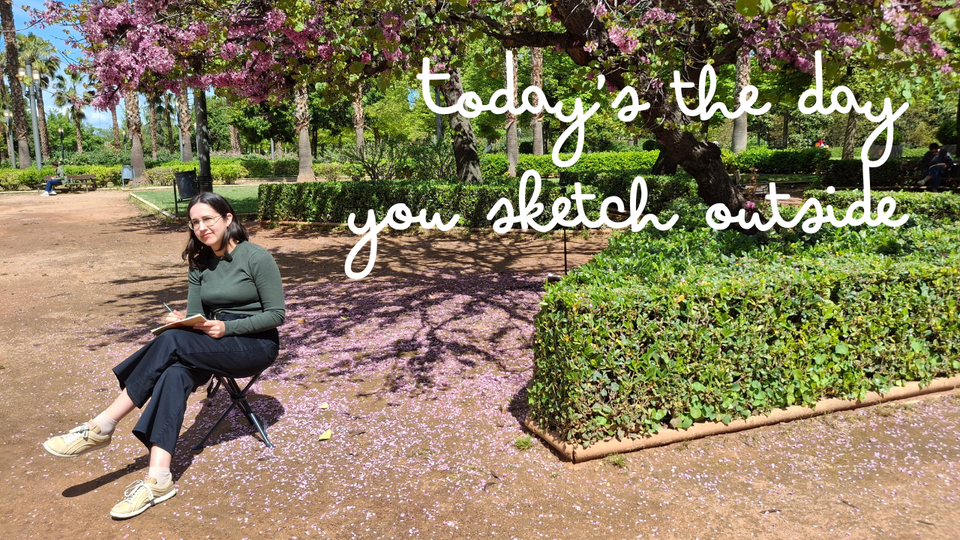
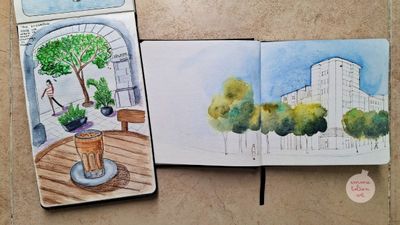
A few weeks ago I met up with a friend to sketch the fleeting beauty of the árboles del amor (Judas trees). To me, their beautiful pink blossoms signal the real beginning of spring in Granada. My friend has been painting since she was at school, but this was only the second time she's been urban sketching, although she's wanted to get into it for a while. Even though she's a more experienced artist than me, I feel much more confident about painting on location than she does, because it's something I do regularly.
If you want to go urban sketching, it's easy to convince yourself that you'll start once you feel more confident, or once you're a better sketcher. But you can't think your way to confidence: you'll start feeling confident sketching outside when you spend time sketching outside. (Just like, much to my chagrin, I couldn't become a more confident Spanish speaker by reading novels, because they're separate – although linked – skills. My anxiety about speaking decreased and my fluency improved when I started showing up to events and letting myself make mistakes.)
One way to start urban sketching is to join an urban sketching group near you (or come to the next Granada Sketching Retreat). But I recognise that not everyone wants to sketch in a group, and not everyone has a group near them that meets regularly or is accessible to get to.
So in this post, I'm going to walk you through your first urban sketching session: what you need, what factors to consider, and how to set yourself up for success. In about 20 minutes, you will have completed your first sketch on location. You've got this!
I also have a YouTube video where I guide you through your first urban sketching session in real time, if you're more of a visual learner. I'll be sketching Lorca's house in Granada, Spain under the beautiful pink blossoms of the Judas tree, and cheering you on as you sketch something in front of you. Think virtual body doubling but with urban sketching.
What does success look like for your first urban sketching session? I'd suggest:
You're not trying to do a perfect sketch or even a good one. You're going to tick the box that you sketched outside, so you can start to feel comfortable sketching in public. Then you can turn your focus to making better sketches and experimenting with different techniques for sketching outside.
If it's not accessible for you to go outside today for whatever reason, sketch something from real life at home! For example, you could sketch your cup of tea or the book you're reading.
For this first session, we're keeping our equipment to a bare minimum. All you'll need is:
You might also want to take a second coloured pencil or a pencil sharpener.
Before you leave home, pause for a moment and think about where you can sketch outside. I'd suggest choosing somewhere you can walk to within about five minutes. (That will also allow you to complete your first plein air sketch and return home in about 20 minutes).
If you're in an apartment block in the city, you might choose a quieter side street or your local park. If you live in the suburbs or somewhere more rural, you could sketch your neighbour's front door or even your own letterbox. If you don't have a stool, you might also want to consider where you can go that has benches, or a tree or an awning you can stand under.
Keep it simple. The goal is to find somewhere where you're less likely to be disturbed (and accept that it's okay if someone does come up and talk to you).
We're ready to go! Grab your materials and head to your chosen sketching location.
Now we're outside, how do you work out what you want to sketch? Here are some factors you might find it helpful to consider:
Spend a few minutes making a small, thumbnail sketch of your chosen subject. Focus on breaking the object into simple shapes, and maybe add some shadows if you have time.
You can set a timer for five minutes if you'd like to. (I prefer to just use a small sketchbook, because there are only so many details you can add to an A6 page with a coloured pencil.)
After a few minutes, pause and notice what sensations you're experiencing at the moment. Ask yourself:
(If you notice you're uncomfortable or it's too loud or anything that feels more 'unpleasant', that's okay too. There's no wrong way to do this – you're gathering information that you can use to enjoy the process more the next time you sketch outside).
My favourite thing about urban sketching is that it forces me to be in the moment and pay attention to what I'm doing and what's happening around me. It's a form of moving meditation.
Now spend another minute or so finishing your sketch.
If you're enjoying yourself, you can keep sketching for longer or even do a second thumbnail sketch. But otherwise, take a moment to congratulate yourself because you have officially done your first sketch on location!
Take a moment to pat yourself on the back (maybe literally). Ask yourself:
Make a quick plan for your next session while you have momentum. You could:
I'd love to know how you found your first urban sketching session! Let me know what you sketched, how you found the experience, and what your plan is for your next session.
Sketches from Granada celebrates every-day moments of connection with strangers, friends and ourselves. I know how easy it is not to be present in your own life, and I hope these sketches inspire you to seek out those moments that are worth savouring.
If this post resonated with you, please share it with a friend you think might appreciate it too!
Celebrating moments of connection with strangers, friends and ourselves

Member discussion