
When you can't read the way you used to
How to enjoy audiobooks (from someone that didn't come naturally to)
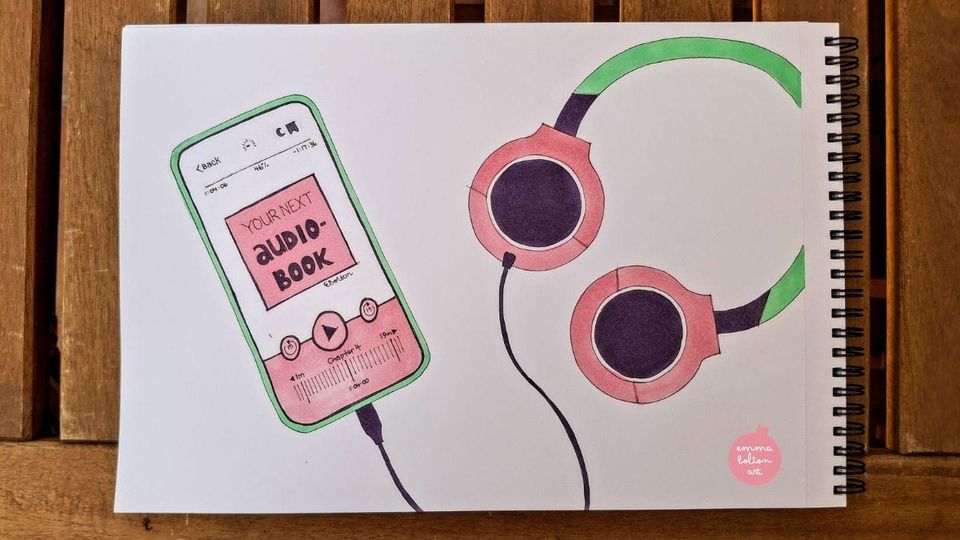
I was talking to a friend (and subscriber) recently who said that for about six months after her son was born, she struggled to read. She loves reading and so this really impacted her. Now pregnant with her second child, she asked if I'd ever had a similar experience and what had helped.
This post grew out of that conversation, and I hope will be helpful if you also love reading but are finding that you can't read the way you used to. While I don't have kids, I have gone through various periods of my life where I found it more difficult to focus or had to engage differently with books because my life circumstances had changed. Learning Spanish as an adult has also encouraged me to get more creative with my reading.
In this post, we're going to talk about listening to audiobooks, and strategies to enjoy them if - like me and my friend - you're a fast, visual learner and your mind tends to wander when you try to listen to long chunks of text. Whether you're breastfeeding, need to give your eyes a rest, or have to commute standing up, having a hands-free reading strategy can make all the difference. (Then in part 2, we'll discuss other ways to play with your reading when you find yourself in a slump or are having trouble focusing.)
Before we start, if you're not a member of your local library, I highly recommend joining. It's a cost-free way to experiment with reading different genres and engaging with books in different ways, that directly benefits authors. It's one of the most ethical ways you can engage with books, and directly supports your local community because libraries provide so many other services too.
This is part of our ongoing series where I reflect on your questions. If you'd like to ask a question, comment on this post or send an email to info@emmabolton.com. (I can't promise I'll answer, but I will if I have something substantive to add to the conversation or can point you towards a useful resource.)
You'll find below a bunch of different strategies that together over time have helped me to start regularly enjoying audiobooks. I'd suggest experimenting with one or two of them to start with, and seeing if they make your audiobook experience slightly easier or more enjoyable. Different strategies will work for you at different times, so stay curious and be kind to yourself as you embark on this audiobook adventure.
If you're predominantly a visual learner, a fast reader, or watch everything on TV with subtitles, you might find (like me) that you need to start small and build up your listening muscles over time. I also highly recommend listening to the audiobook as your sole activity if you can. Trying to multi-task will only split your focus further. You can try:
If you're generally exhausted or finding it difficult to focus when you read, how can you reduce how much energy you need to enjoy the book? You could try:
When you choose new books, you might also find it helpful to read in genres you're already familiar with and know you love.
If you're reading a book in translation, the translator is crucial and effectively like a second author. Similarly, when you're listening to an audiobook, the narrator can make or break the experience. You can try:
If you're having trouble focusing, sharing the experience with others can lighten the burden and create a moment of connection. Also, I love a bit of body doubling. You can try:
Audiobooks are never going to be my personal favourite kind of book to read, but I love having them as an option, and they're essential in certain circumstances (like when my middle-aged eyes are feeling tired or I'm about to spend 30 hours travelling to Australia to see my family). If you love reading, I think it's worth playing with different options to see if it's a format you can make work for you.
I've focused on audiobooks in this post because it's the hands-free option I have personal experience with (and that didn't come naturally to me). But if you enjoy reading on an e-reader, you could also look into accessibility options for reading hands-free. For example, a remote-control page-turner that allows you to position your e-reader at eye level and turn the page with a small bluetooth remote.
What strategies have helped you read again when life made it difficult to do so?
Sketches from Granada celebrates every-day moments of connection with strangers, friends and ourselves. I know how easy it is not to be present in your own life, and I hope these sketches inspire you to seek out those moments that are worth savouring.
If this post resonated with you, please share it with a friend you think might appreciate it too!
Celebrating moments of connection with strangers, friends and ourselves


Member discussion